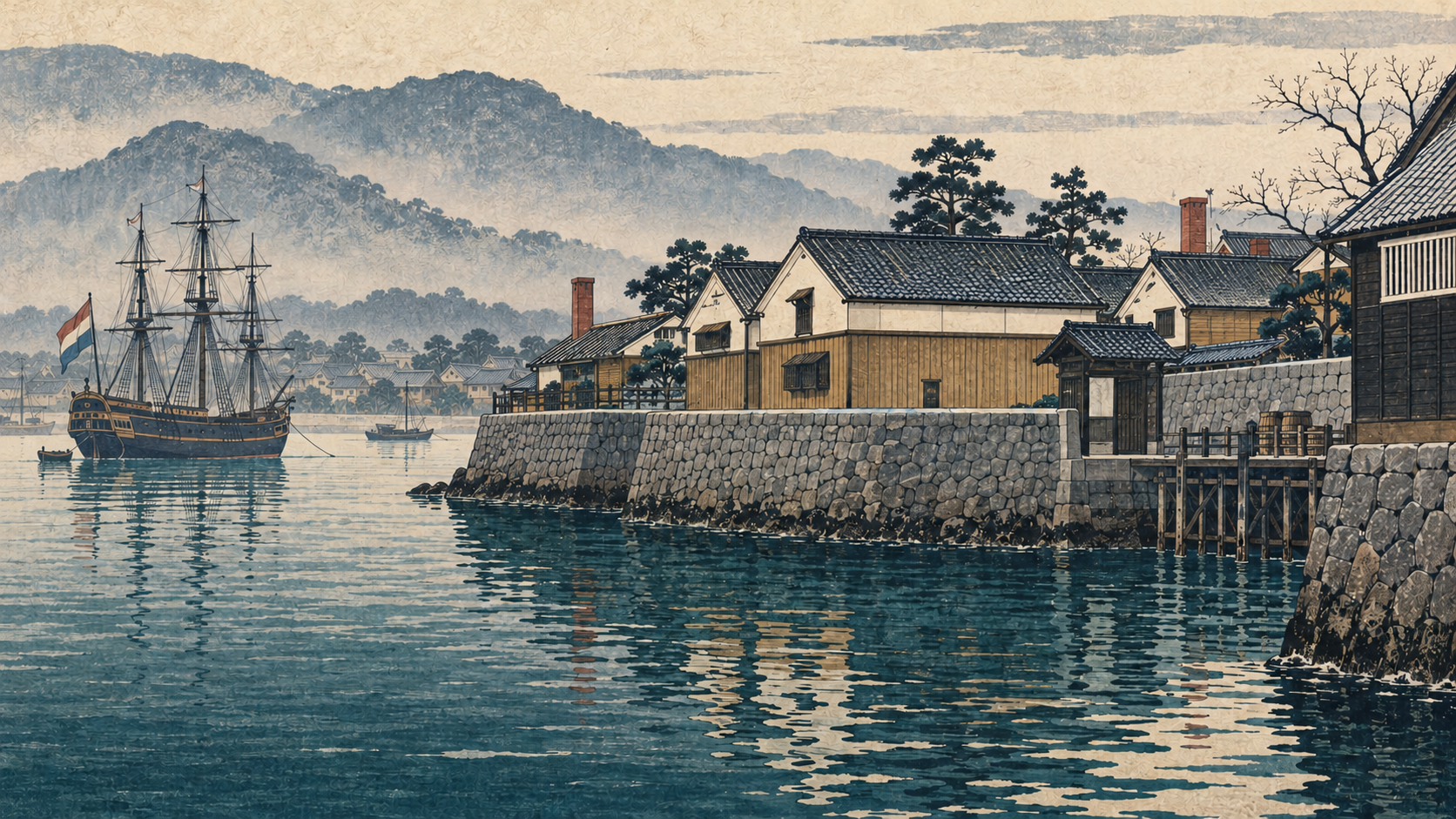
we kept new year's day. Many of the Japanese assisted us in celebrating it.
本文翻刻
英訳第2版(1795)第3巻、72頁末「1776, Jan. 1」から74頁「the guests took their leave.」まで。元日の宴会を述べる一続きの段落全体。
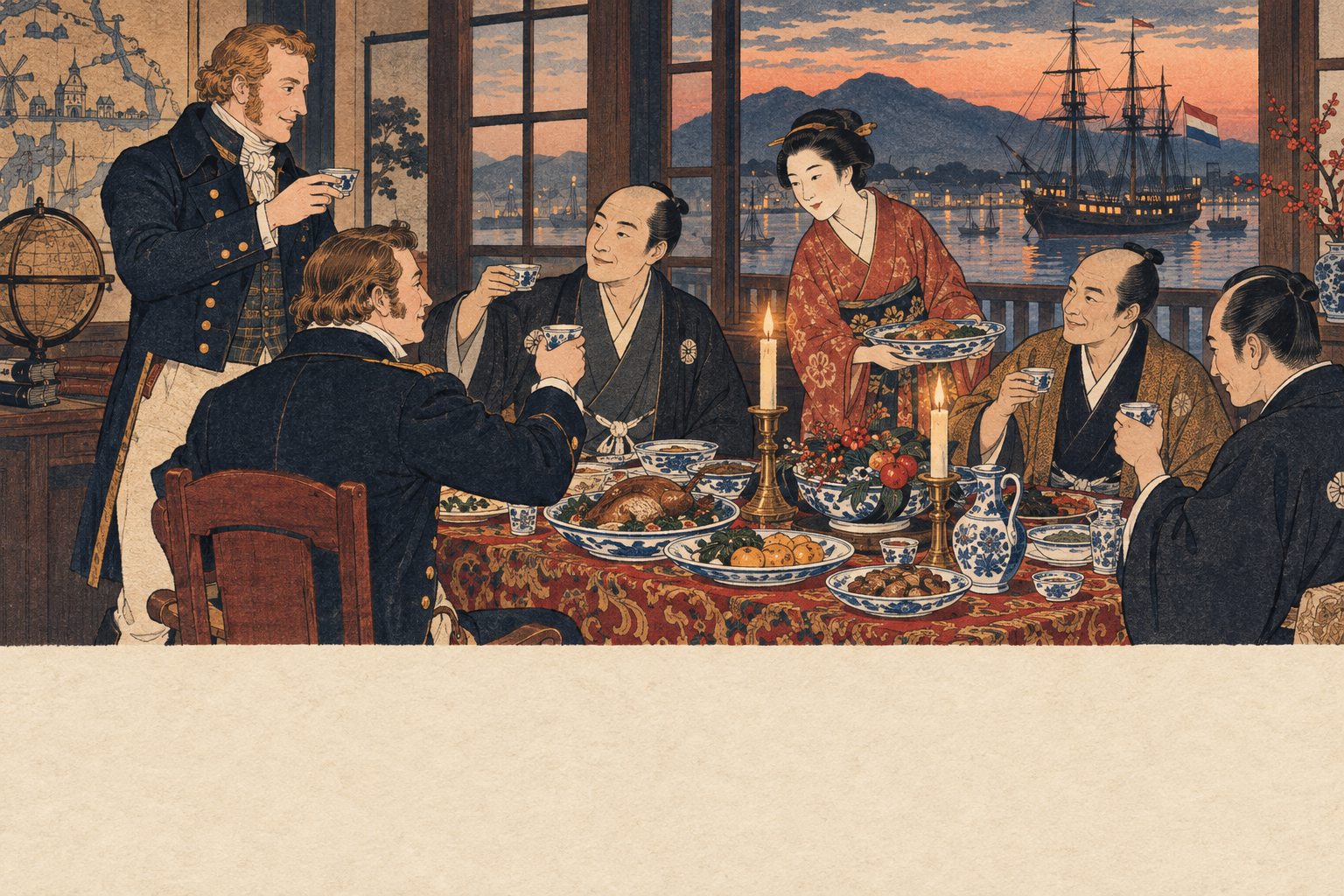
1776, Jan. 1, we kept new year's day. Many of the Japanese assisted us in celebrating it. The cold was now very severe and intense, although the ground was quite bare. According to custom, this day about noon most of the Japanese that had any thing to do at the Dutch factory, such as the head and sub-banjoses, the Ottonas, the head and sub-interpreters, the surveyors, and others, came to wish us a happy new-year. Dressed in their holiday clothes, they paid their respects to the chief, who invited them to dine with him. The victuals were chiefly dressed after the European manner; consequently but few of the dishes were tasted by the Japanese; nevertheless, every thing was so contrived, that there were no baskets full of fragments gathered. Of the soup they all partook; but of the other dishes, such as roasted pigs, hams, sallad, cakes, tarts, and other pastries, they ate little or nothing; but in their stead was put on a plate a little of every dish, and when this plate was full, it was sent to the town with a paper on it, on which was written the owner's name, and this was repeated several times. Salt beef and the like, which the Japanese do not eat, was set by, and used as a medicine. The same may be said of the salt butter, of which I was frequently desired to cut a slice for some of the company; it is made into pills, and taken daily in consumptions and other disorders. After dinner, warm sakki was handed round, which was drank out of lacquered wooden cups.
On this festive and joyful occasion, the chief invited from the town several handsome girls, partly for the purpose of serving out the sakki, and partly to dance and bear the girls company who were already on the island. After dinner too, these girls treated the Japanese with several of their own country messes, placed on small square tables, which were decorated with an artificial fir-tree, the leaves of which were made of green silk, and in several places sprinkled over with white cotton, in imitation of the winter-snow. The girls never presented the sakki standing, but always, according to the custom of the country, sitting. In the evening they danced in their own country fashion; and about five o'clock the guests took their leave.
Internet Archive所収の1795年英訳第2版、印刷72〜74頁の画像を2026-10-09に目視照合。長いs(ſ)をsに、行末で分割された単語を連結し、柱・頁番号・キャッチワードを省いた。綴りは原本に従う。段落の間の改頁は解消した。本文範囲は宴会描写の終わりまでで、74頁以下に続く遊女制度の一般的説明(次の日付は78頁のJanuary 20)は含まない。スウェーデン語原著との再照合は今回行っていない。
原典の掲載ページを開く ↗